
He Never Even Touched Me!
When I was a medical student one of the basic skills we needed to learn was how to examine a patient. There were three stages to this process: inspection, palpation, and auscultation. This means looking at the whole patient and the part of the body of interest; feeling with one’s hand, say, the abdomen for swellings or other abnormalities; and listening with a stethoscope, particularly to the heart and lungs.
How high can a flea jump?
The stethoscope was invented in 1816 by the French physician with the impressive name of René Théophile Hyacinthe Laënnec. The purpose of this instrument was to replace the direct method of auscultation whereby the doctor would place his ear on the patient’s chest, because this was felt to be indelicate in the case of a male doctor and a female patient. It was also cynically said that the length of the stethoscope tubing was determined by the height to which a flea could jump.
The sense of smell is also useful for a doctor. For example, I can usually tell a patient is a smoker by the acrid smell of tobacco fumes on their person. And before chemical methods were invented to detect sugar in the urine of a diabetic patient, it was said one could use the sense of taste for this purpose.
When I was a new clinical medical student in the 1960s and hadn’t yet settled into a routine, a distinguished cardiologist, Dr Graham Hayward, on a teaching round chose me to present the findings on a patient. To my shame, I had to admit that I had not yet examed this particular patient. Thus I was at a loss when he asked me if the patient’s jugular venous pressure was raised (by observing the large veins in the neck), whether the heart sounds were normal, and whether the patient’s liver was enlarged. Dr Hayward commented, good naturedly, that I ‘didn’t look, didn’t listen, and didn’t feel.’ The lesson I learnt and have never forgotten, was always with every patient, when appropriate, to look, listen, and feel.
Touching patients going out of fashion?
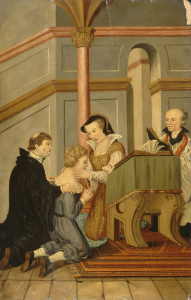
Unfortunately, in these days of scans and computers, it seems physical examination of patients is going out of fashion, and maybe isn’t even taught anymore. Putting one’s hands on a patient is very important, not only because it may enable one to gain essential clinical information, but because it is reassuring to the patient – the healing touch. The importance of this should not be underestimated. It was recognised in antiquity as the royal touch or ‘the laying on of hands.’ It occurs in the Bible:
And Jesus said, Somebody hath touched me: for I perceive that virtue is gone out of me. And when the woman saw that she was not hid, she came trembling, and falling down before him, she declared unto him before all the people for what cause she had touched him, and how she was healed immediately. (Luke 8:46-47)
They’re mine!
In the case of a patient with a skin disorder, unless there is obvious infection, it is particularly important to touch the affected skin. This is to reassure the patient that he or she is not ‘untouchable’, which the patient may be fearing. Of course, one would always wash one’s hands afterwards, and indeed, one should always wash one’s hands before examining a patient. I gradually acquired the skill of touching patients, and found my hands became more sensitive. I was able to practice palpation and other skills on an obliging girlfriend I had at that time who acted as a model for some of my anatomical studies. For example, a normal feature of the female breast is the presence of small protuberances on the areola around the nipple. These are the sebaceous (oil secreting) glands known as Montgomery’s tubercles, described in 1837 by William Fetherstone Montgomery, an Irish obstetrician. When I noted and named these structures, my girlfriend declared, ‘They’re not Montgomery’s – they’re mine!’
Wash your hands before and after
There are techniques for palpating different parts of the body, which have to be learnt. Of course one’s hands must be clean and warm. On visiting patients at home, especially on a cold day, I would ask to run my hands under warm water before examining them. Some patients were impressed by this courtesy, but to me it was a normal procedure.
The importance of the human touch is further illustrated by the fact that when I was in full-time practice, occasionally a patient would turn up saying she had attended a university hospital and been seen by a famous professor, but would relate that, to her disappointment, ‘He never even touched me.’
Now, for those doctors who didn’t have the privilege of being taught by someone like Dr Graham Hayward, let us get up to date. Thanks to the BBC online news we learn: ‘Jess’s Rule to be promoted in all GP surgeries in England.’ Quite right too, but it is shocking that it should need to be promoted at all. See my earlier blog. As an example of what can happen if this basic approach is neglected, there is a link describing the case of a poor woman whose symptoms were initially dismissed as unimportant. ‘She said she had suffered from abdominal pains, needing to urinate more often and quickly felt full when eating – key symptoms of ovarian cancer. At times she said she had looked pregnant as a result of the bloating, but her condition was never properly examined. “At the time of my diagnosis if a professional had ever felt my stomach they would have felt the tumour, but nobody ever did.” ’ (My emphasis.)
Text © Gabriel Symonds
Picture courtesy Wikimedia Commons of an oil painting by Henry Hayman, 1916, showing Queen Mary performing the Royal Touch.